
Manual for inspectors
This manual explains how LooView works, how you take a measurement and what happens to it afterwards. Read it once; after that you will know what the map shows and why.
1. What LooView is
LooView measures public toilets independently. No stars, no advertising: an inspector stands at the door, takes two photos (the toilet, and the washbasin with the door) and answers four fixed questions. From that follows a LooIndex from 0 to 100 and a class:
| Class | LooIndex | Meaning |
|---|---|---|
| A | 85 or higher | Clean, stocked, safely lockable and well lit. Nothing to report. |
| B | 70 to 85 | Clean and usable, with one clear deficit, such as a step at the door or a flickering light. |
| C | 50 to 70 | Usable, but with several deficits: litter on the floor, smell, an empty holder or a doubtful lock. |
| D | below 50 | Avoid until something changes. |
The LooIndex rests on four pillars: hygiene (35%), stock (25%), accessibility (20%) and safety (20%). The inspection engine judges the photo on what it shows; whatever is out of frame counts as neutral, never as a deficit.
2. Your account
- You sign in with Google or with an e-mail address and password. After signing up you get a confirmation mail; you can measure straight away.
- In your profile you choose a display name or nickname. That name appears next to your measurements on the city page and in the review lists. A hand-written review can be posted anonymously.
- Your e-mail address and IBAN are never public. Your profile page is visible to you and to administrators only.
3. Taking a measurement
- Open the measuring page (the Snap & Certify button on the map, or /certify) and stand at the door of the toilet. Your phone fixes the location; stand outside or near a window if the GPS hesitates.
- Choose a new location or a toilet that is already on the map. A measurement from more than 300 m away is refused: you measure on the spot or not at all.
- Take two photos from inside, with the light on: first the toilet (bowl, seat and floor), then the washbasin with the door (soap, paper, hand drying and the lock). No people in the picture, not in the mirror either. If a face, a mirror reflection or a card is in it anyway, it is pixelated before the photo leaves your phone. The photo travels without location or device data.
- Answer the four questions: smell (fresh, neutral, bad), stock (full, low, empty), lock (solid, doubtful) and access (step-free, step or stairs). One question is voluntary and never counts towards the score: is the toilet worth a visit?
- Check the address. It comes from your phone's location and the house number is easily one off; correct it in the address field if so. A headline of at most 80 characters is allowed; it is not required. Tap Save.
You see the result: the seal with the class of your photo, the score, the four pillars, the inspector's note and the features seen on the photo. Under How the score was calculated you see which rules intervened; the full calculation method, with every weight and every ceiling, is at /methodiek. If you walk away while it is processing, the measurement finishes by itself; the status bar under the header shows how far it is and offers Try again if something went wrong.
4. When a toilet gets its class
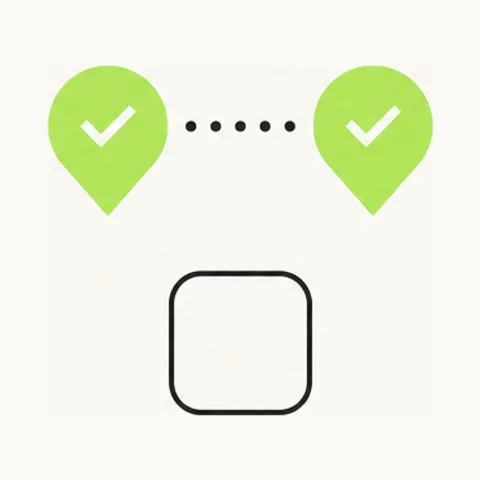
Your measurement is one vote. A toilet gets its public class only once 2 different inspectors have measured it at least 24 hours apart. That way a class is always the judgement of two people on two occasions, never of one photo.
- Every measurement is valid for 180 days. After that it no longer counts. When fewer than 2 valid measurements remain, the class expires: the pin turns grey and shows the old class as history until someone measures again.
- A third or later measurement counts as well. Per pillar the middle value of the measurements that saw that pillar applies, so one outlier does not decide the class.
- If you measure the same toilet again, your new measurement replaces your previous one. One person is always one vote. Your first measurement moment is kept, so a repeat can never take a toilet's class away.
- Two inspectors within 24 hours? Both measurements count, but the class waits for a measurement on another day. The result screen and the card say exactly that.
What the map shows:
| Pin | Meaning |
|---|---|
| Grey with a number | That many inspectors have measured; the class follows with the second, a day later. |
| Coloured with a letter | The toilet has a class. A gold ring is class A. |
| Grey with a letter | The class has expired; the letter is the last class. |
The inspector's note and a facility alert for the operator become visible only once the toilet has a class. The photo and the features are always shown. Your own review of a toilet without a class is not in the public lists yet; on your profile it says Class follows.
5. What is refused
- A photo that does not show a toilet, or is too dark, blurred or distant to judge. You get an explanation and can take a new photo.
- A measurement from more than 300 m away.
- A photo with recognisable people or documents that were not pixelated. Normally that happens automatically; if it fails, publication is blocked.
- A measurement left unfinished for more than 24 hours. Take a new photo then.
6. Your profile
Your profile shows your measurements, the toilets you measured first, your photos and your average LooIndex.
- A review you wrote yourself can be edited (text and tags) or deleted.
- For a toilet you created you can change the headline and the features. The name and the location of a toilet that others have also measured can no longer be changed or deleted by you: those measurements are theirs.
- To have your account deleted, mail info@looview.io. Your reviews then stay anonymously; your name and address details disappear.
7. Titles and listings
- Founding inspector of a city is everyone who measures before that city's map opens. The map opens at the city's target: one measured toilet per 2,000 inhabitants. The list is on the city page and stays there.
- City Inspector is whoever made the most measurements in a city in the previous season (spring, summer, autumn, winter), with at least 25. Whoever earns the title 3 times is Honorary City Inspector for good.
- A new city activates itself once 50 different toilets in it have been measured. Nobody has to apply for anything.
8. House rules
- Measure only where you are. The system checks the distance; a clever detour is fraud and costs you your account.
- No people in the photo. Wait until the room is empty.
- Describe what you see and smell, not what you think of the venue or its owner. The voluntary questions are there for your opinion.
- Do not measure together with someone else at the same moment to force a class; the one-day rule exists for exactly that reason.
- An operator may measure their own toilet, but the class comes only after a second, independent inspector. It cannot be bought.
9. Help
- Questions, or something wrong on the map: mail info@looview.io or use the contact form.
- If the location does not work: allow location access in the browser, switch Wi-Fi on and stand outside for a moment. The measuring page tries twice and explains why it failed.
- The programme terms for founding inspectors in Amsterdam are at /founding-inspector; their manual is under the Founding inspector tab.