
A dirty toilet is a complaint with nowhere to go. Now it gets measured.
The same toilet, endlessly.
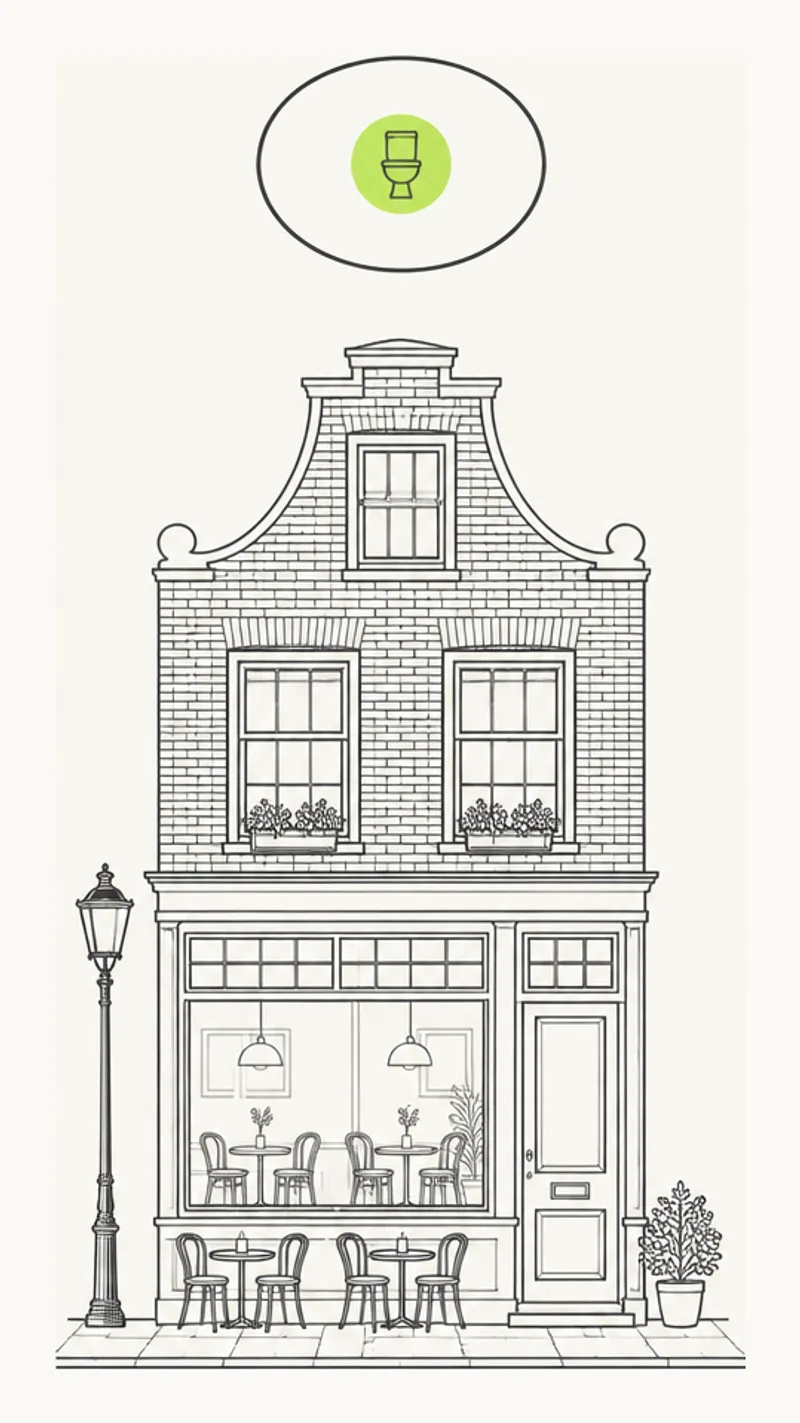
For years, as an ordinary visitor of bars, restaurants and other public places, I ran into the same thing over and over: a dirty toilet. No paper, a lock that did not work, a smell that stopped you at the door. Not once, but structurally, in places where everything else was well looked after.
What bothered me more than the toilet itself: there was nowhere to take it. Telling the staff felt like nagging. A one-star review says nothing about the toilet and everything about my mood. And an owner who serves a hundred guests a night never hears it in a form they can act on.
That is where the idea came from. Not another place to complain, but a way to record it: the same toilet, the same questions, by different people, on different days. Then it is no longer an opinion but a measurement. And a measurement can be shown to an owner without it being an attack.
That is what LooView is about: awareness among hospitality owners and everyone who runs a public toilet. Not by shouting, but by showing them what their visitors see every day.
Martin Forest · founder of LooView
Three things every toilet complaint has in common.
 01
01You tell the waiter, you write a review, or you say nothing. None of the three reaches the person who organises the cleaning, at a moment when it still matters.
 02
02Whoever runs the place rarely stands in their guests' toilet. A cleaning schedule says what was planned, not what a visitor finds at eleven at night.
 03
03Stars average everything away. A toilet that is clean on Monday and not on Saturday gets three stars and nobody learns anything. You need fixed questions, and more than one pair of eyes.
 §1
§1An inspector stands at the door, takes two photos of the empty room and answers four fixed questions: odour, lock, paper, step. No free text, no stars.
 §2
§2A toilet gets a class only once two different inspectors have measured it, at least a day apart. One measurement at a good or bad moment does not count. After 180 days without a new measurement the class lapses.
 §3
§3A venue can request a measurement, but cannot submit one, edit one or pay to jump the queue. Inspectors are paid for the visit, never for the outcome. That is why our map starts empty, and we say so.
You can start today.
As a visitor, by measuring a toilet. As an owner, by requesting a measurement before someone else does it for you.